Kayoko (Sato) Nakagawa
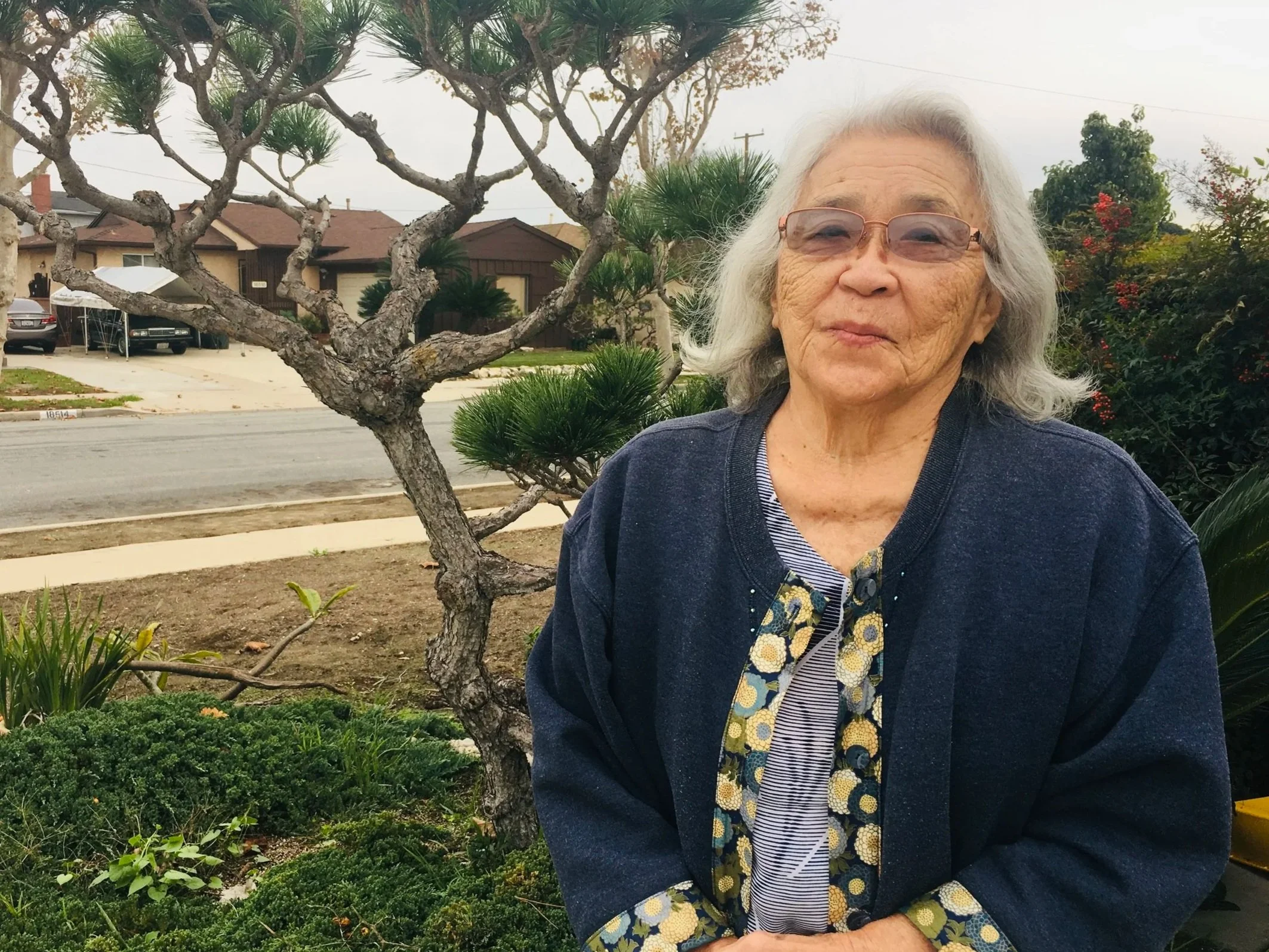
“You see, that’s America for you. You know, you think America is good? They’re not good. I mean, to me. Well, at least we survived. ”
South of Los Angeles, nestled within the city of San Pedro and neighboring Long Beach, lies Terminal Island. On Seaside Avenue, in all its industrial backdrops among shipyards stands a humble yet remarkable monument overlooking the water. Only this memorial today stands as a remembrance to the vibrancy that existed here decades before. The hollow vacancy, with such sterile structures that surround it today, makes me grieve for a community long gone. What stands out here at the Terminal Island Japanese Fishing Village Memorial are poignant components of a torii gate, two fishermen captured in a working pose, and a Japanese poem that reads:
Black Current off our shore
Fishes so plentiful
yet, hardships parents endured
we remember
and honor forever
our village no more
Before the U.S. involvement in WWII, this island was home to the family of Kayoko Sato and more than 3,000 Japanese Americans who contributed to a vibrant community that upheld the booming canned tuna business. Imbued with fishing expertise from their homes and their heritage in Wakayama prefecture, the Issei and Nisei were expert commercial fishermen who were essential to the industry. The island bustled with their shops, their schools, their places of spirituality. But in the aftermath of Pearl Harbor, the Terminal Island community was targeted with the cruelest of eviction and erasure policies from the government. Within hours of Pearl Harbor, community leaders were arrested and in just days after the signing of EO 9066, the community was cleared out, boats impounded, and buildings razed. As Kayoko repeated often throughout our interview, “America is cruel.“
Impressionable as a junior high school student at the time of the war, Kayoko brought up anecdotes that had become core memories. When the family was leaving for Manzanar, her mother had to jump onto the train holding two suitcases. She fell, and none of the soldiers who were watching helped her up.
Kayoko’s memories within this conversation revolve heavily around remembering her mother, whom she recalls with deep adoration. “You can’t find anyone like my mother.” Kayoko’s daughter, Joyce Ogushi, contributed to the conversation and her responses are indicated throughout.
Kayoko passed away in December 2025 at 99 years old. I am deeply grateful to her family for allowing her story to be shared and documented.
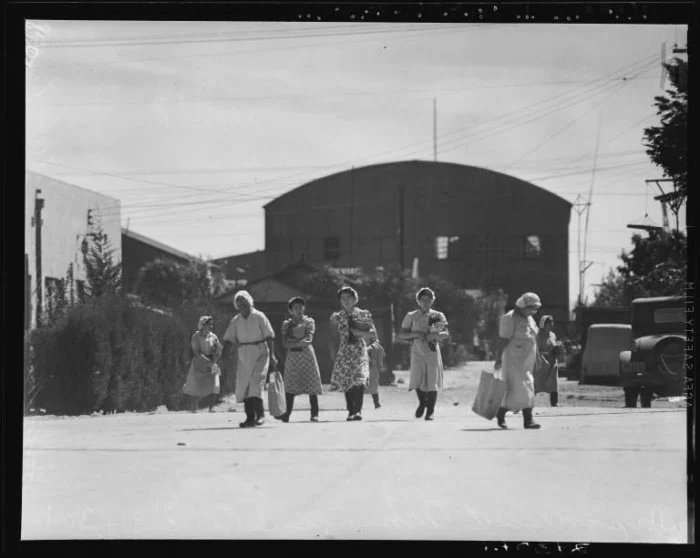
Female employees of a Japanese fishing cannery leave work for the day, 1940, Terminal Island, California.. (2020, November 18). Densho Encyclopedia. Retrieved 08:03, March 29, 2026 from https://encyclopedia.densho.org/sources/en-denshopd-i227-00012-1/.
Can you tell me about where you were growing up before the war and what it was like to grow up on Terminal Island?
Well, let's see. Terminal Island is, you know, everybody wasn't rich. You know what I mean? But my mother and my father, they used to work hard. My father was a fisherman. My mother was working in a cannery, to pack. And that's where we grew up. Everybody was, we'll say, not poor but...
Working class.
Yeah, yeah. And people was kind. My mother was kind to everybody. During the camp, she worked at the mess hall, where they're feeding. And then my mother was the type to wash the guy's uniform, everything by hand. And then people say, "Could you do my washing?" And they're sick, you know? So my mother, oh. My [voice breaks] I mean it was so hard for [her]. My mother was a kind, kind person. You can't find a person like that. She was 4 feet 11. She was tiny, tiny. She used to cook for people and give them food. You can't find a person like that.
So she was working in the cannery.
That generation had a hard life. Not just my mother, everybody. Yeah, but everybody had a lot of feeling. And when they get sick, they call my mother. My mother is a type that would do so much. My mother's generation, they suffered a lot. They had to leave everything and walk out of the house. Just two suitcase. And then, my father was already taken into a camp. A year before that, my brother was killed, younger brother.
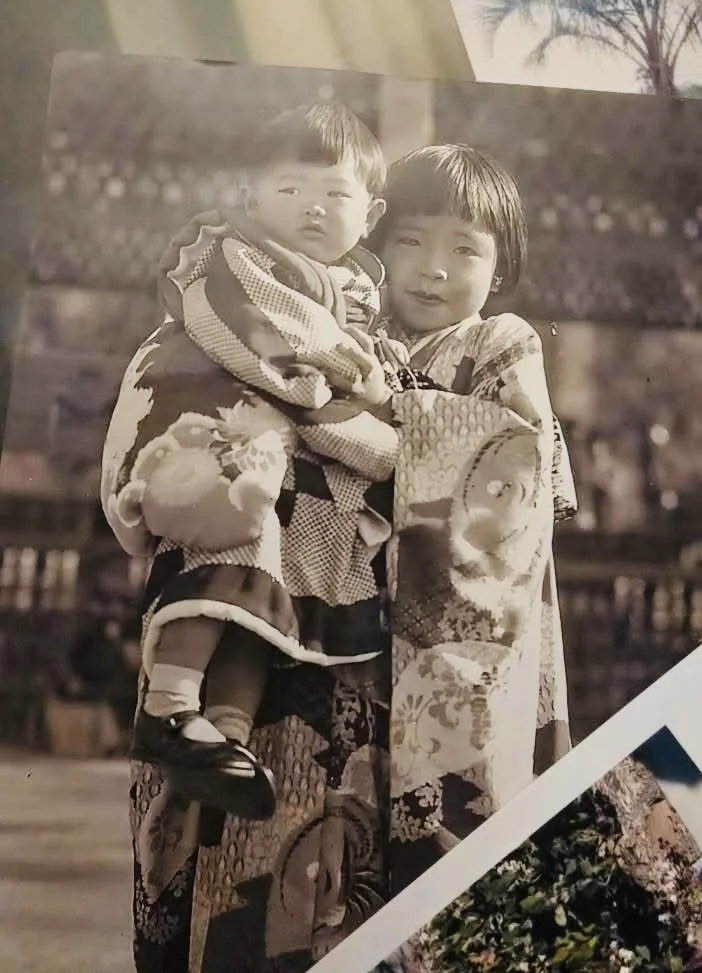
Kayoko holding her younger brother, Kiyoji
What happened?
He was going to school. Before that, the church was babysitting him because my mother was at work. Well one day, he saw a lot of people across the street, and he was crossing the street, and a cannery truck killed him. So you never know. And we were already going junior high school. And then they called us to the office. They said, "Kayo, go home. Your mother's waiting for you." I said, "Why?" During that time, I could never forget that feeling. My younger brother.
How old was he?
He was five. He was going to an afternoon school. So in the morning he was running around with his friends, you know. And he saw a bunch of friends across the street, he was crossing the street. Kiyoji. It was a very hard life.
When Pearl Harbor happened, you were in high school or in junior high?
Junior high. When I graduated from junior high, we were taken into camp. So during high school, we were in Manzanar.
Do you remember the day it happened? What was that like?
There was German, Italian, Japanese because that was the nationality we have over there. What happened was they didn't take German or Italian. So I had them as a classmate and we were talking, and they said, "Kayo, how come they're taking you? I'm Italian." I mean, kids. Even kids know, how come they're taking only Japanese?
Then we told those girls, my classmates, I said goodbye. We were taken in. And they started to cry. And we were crying. They said, "When you get into camp, you write to me, okay?" And then we used to correspond from camp to my classmate. I think I might have their picture, I can't remember. You see, that's America for you. You know, you think America is good? They're not good. I mean, to me. Well, at least we survived, we didn't get killed.
Your family must have been shocked. Do you remember their reaction to Pearl Harbor?
Everybody was shocked. Terminal Island was all Japanese. That little island, there was all Japanese. And that's where I grew up. And then the war started then they evacuated all the people. Could you imagine, everybody had to get out of Terminal Island with two suitcase? Look at my mother, they work hard. And she just bought herself a new stove. She was a fabulous cook. I feel sorry for all the other people. Two suitcase. You know, my neighbors and everybody, we had to go and there's a car, truck, waiting away...in the island.
The trucks were people waiting to come in and steal what was left behind?
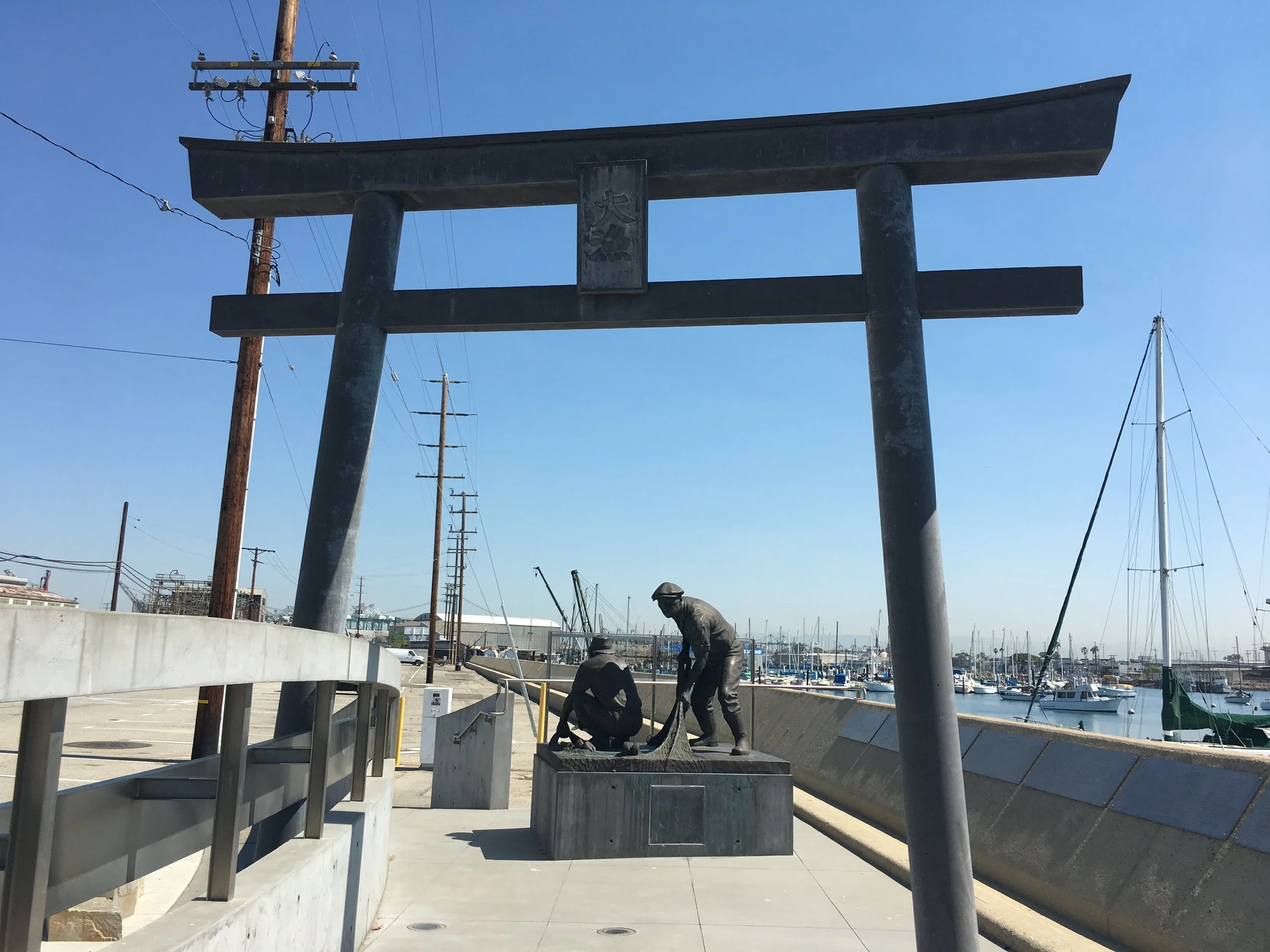
Terminal Island Japanese Fishing Village Memorial
Yeah, taking. That was in my life, to see them take my stuff. America was very cruel.
[Joyce]: If you had a good neighbor, you were lucky. My mom told me a story about how these people had money, and what they did was they dug it in the yard or somewhere and they'd have it when they returned. Well, some didn't. Some people discovered it, I guess. Because they couldn't take the money with them. They had no banks. They couldn't put it in the bank, so what they did was they dug holes, under the stairwell.
They couldn't bring their own money?
[Joyce]: They had a lot of money, I guess, they had saved. So they didn't want to take it. But they didn't know what to do. And 48 hours, you're just like, "What do I do? What do I do?" But some people, when they came back, it was gone. It’s so sad.
What happened to your father? Where did they take him?
He was already taken to some army camp. They took my father, the neighbor, everybody, all the guys. And they left the mother and kids. But good thing we had relatives in Buena Park. So that's the life we had. But then you had to live it.
Then when I got to camp, I went to high school. We used to go eat in the cafeteria because we don't cook in that barrack. So we all lined up and went. And then we could smell the lamb. So we just had to take the rice home and eat it. I mean, I don't know why they give us stuff like that. That was our life, my life. And then we had to sleep with so many family in one room, that lineup. But we take it as it comes. My mother was really kind. She used to do everybody's washing. You can't find a person like my mother.
And your father, did he ever come to Manzanar?
Oh, yeah. He came to the barrack with so many people. I mean, America. They were cruel, they were cruel. But can't help it because Japan bombed Pearl Harbor. I don't know why they had to do that. And then the government said "get out" of the camp. So all my girlfriend went as a domestic. I went as a maid. You know, we had no place to go. And we were out of high school. So all my friends went as a domestic.
Where did you go to work?
Beverly Hills. They took us in. They gave us a job, and then we went as a schoolgirl. Yeah, because we were just out of high school. And those people were very kind. Very kind. They took us in. They're different nationalities, they're Italian. At least they gave us a place to sleep. America was, you know, they were cruel. They say, "Get out! Get in! Get out!" And we grew up in that situation.
What are some of your vivid memories of camp? What stands out to you about your time in Manzanar?
Well, I have a lot of memory because I used to work in the summertime. I used to work in a hospital. I was a nurse's aide in Manzanar. The shift was 3:00 to 11:00. And people will be crying. I go in the room and then I said, "Bachan, doushita no?" (What’s wrong?) I talking in Japanese because they're Japanese [laughs]. And well, they're complaining, but I listen to them. And then I tell the doctor what's going on in the ward. And they used to say, "Kayoko-san, Kayoko-san." I say, "Okay, I'll be there."
They were calling for you.
Yeah. During the summer, I worked there. And they used to put me in the ambulance and take me home to my barrack. Isn't that funny, huh? Is my life interesting?
Yes, it's very interesting.
[Joyce]: Mom, what block were you on?
Block four. We're American citizens, you know? And they treat us like dirt.
Did you go to the dances in camp?
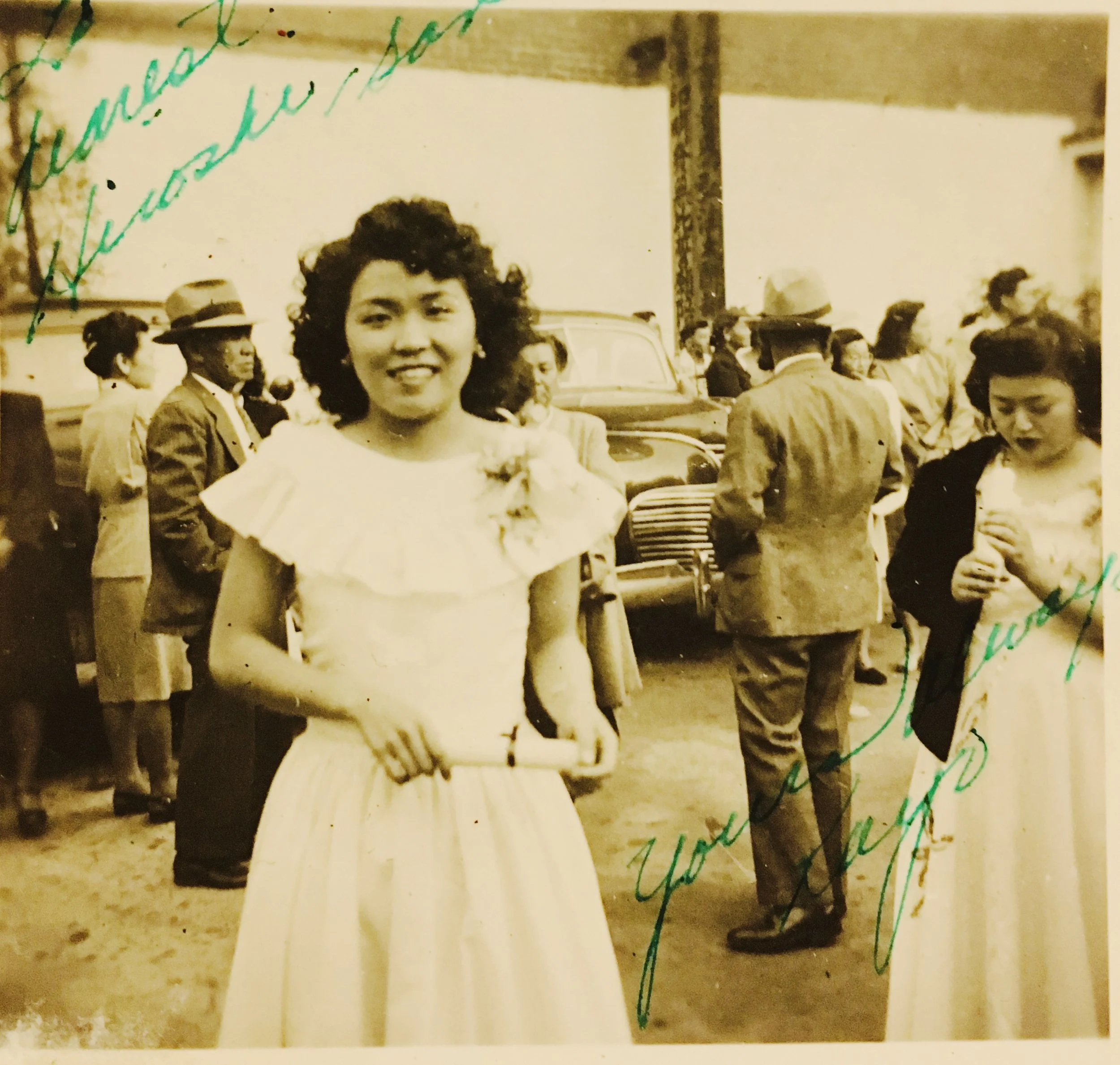
Kayoko’s high school graduation
Dances? Oh, yeah. [laughs].
What were they like?
Well I loved to dance. Me and my girlfriend — when I was working in the hospital, those guys, the older one, they were going to be a doctor. When we parted, they said goodbye. And did you know they were in contact with me? After they went to be a doctor. Yeah, those young boys did real good. And when I got a letter, I was already married [laughs]. They were shocked I was already married. Yeah, but they were nice boys.
But you know, nursing aide is bed pan. But I didn't mind it. I used to feed the people that couldn't eat. I always wanted to be a nurse, something like that. But with the war and then we had to get out, we had no place to go. I know. That was my life.
So you would have wanted to become a nurse?
I think so. You still have your mother, don't you?
I do, yes. I have my parents.
Enjoy them. I know because, you know...nothing like your own mother.
I know.
I loved her. She was what she was, I really — I have nothing good to say about my father. My father was very, very, I don't know. He was what he was, a Japanese Issei, man. But everybody used to know my mom because she was so kind to people. I can't be like her. Too much, too much. And then some people get mean or something. She'd say, "Feel sorry for them.” That was my mother. She said, "Kawaisou deshita." My mother was like that. She was very humble. To me, I hope I had part of my mother's feeling.
What was her name?
Sato Tori. Bird.
What about your father's name?
Tomegoro. But my mother's name is Tori [laughs].
And they were from Wakayama?
Wakayama-ken. Higashimuro. All little towns.
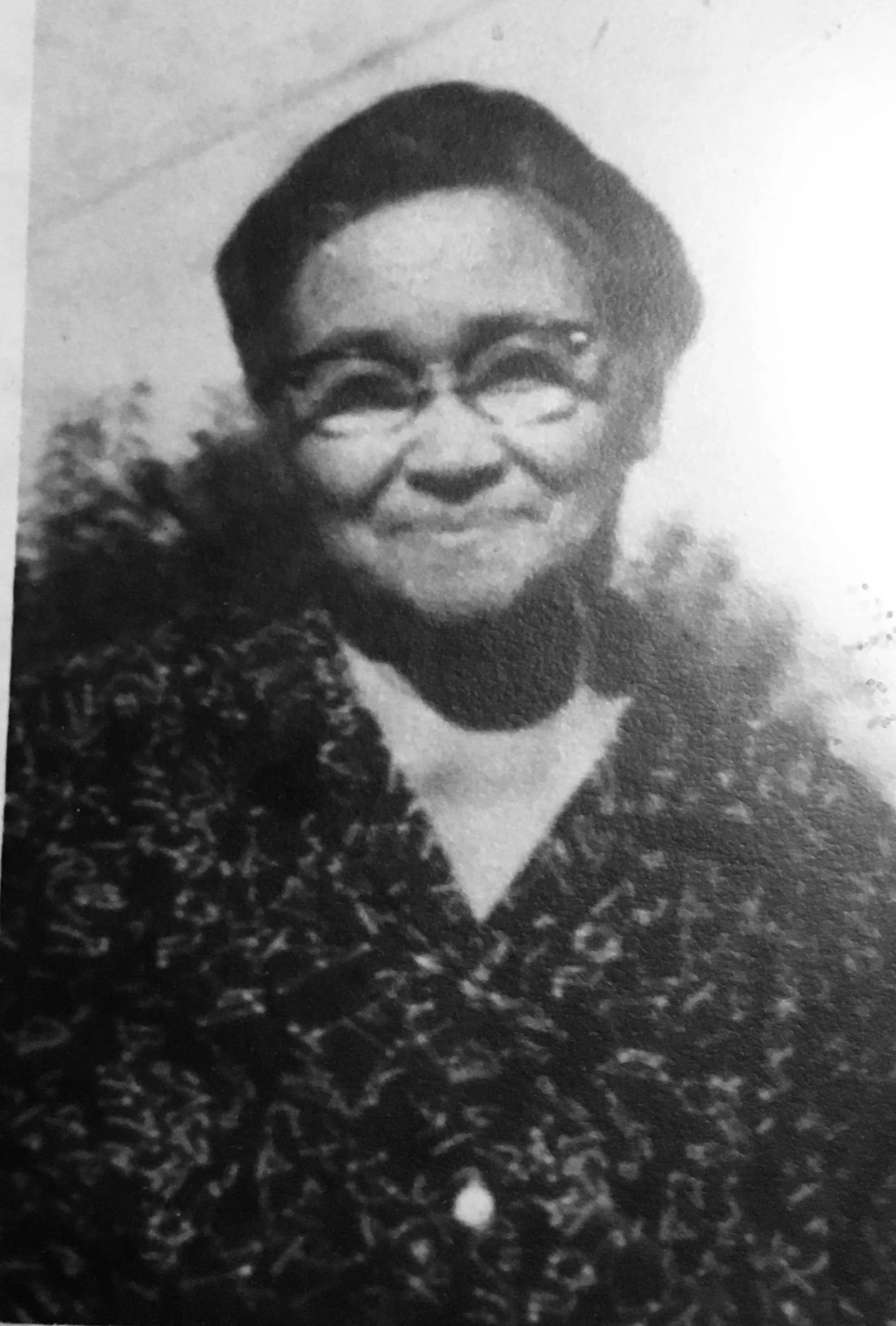
Kayoko’s mother, Tori Sato
Did your mom ever talk to you about what she went through in camp?
My mother was a very humble person. And sometime people took advantage of her, and they kind of bug me. But that was my mother. She was so humble. So yasashii (kind, gentle). She used to sentaku (laundry) she did it for people. They used to bring it. Oh, you'd be surprised how people are.
[Joyce]: They knew she was very neat. I always remember my grandmother, she would wash the sheets, but she would put starch on it. I was just kind of amazed by that.
And then when the war was over, your parents had nowhere to go. Where did they end up living?
They came to Long Beach. At that time, I was doing domestic. I had to get out and do domestic. I was a maid.
How did you get that job?
I got it at camp. They told us, they were nice people. We used to go to Beverly Hills. And then all my girlfriends, we all got a job. Then my day off, we all got together, went to downtown Los Angeles. We all go shopping, just to look around. And then we used eat food, Japanese food.
[Joyce]: And when she would return home, she would have lipstick and like a flower in her hair. And her mother would get mad. "Take that lipstick off." But she loved it. She was young.
How did you meet your husband?
I was young then, this was junior high school. My husband came to visit after he was discharged from the army. He's a Kibei, he was educated in Japan. And then he came and he went to English school. And he used to pass my mother's house all the time.
[Joyce]: He's seven years older than her.
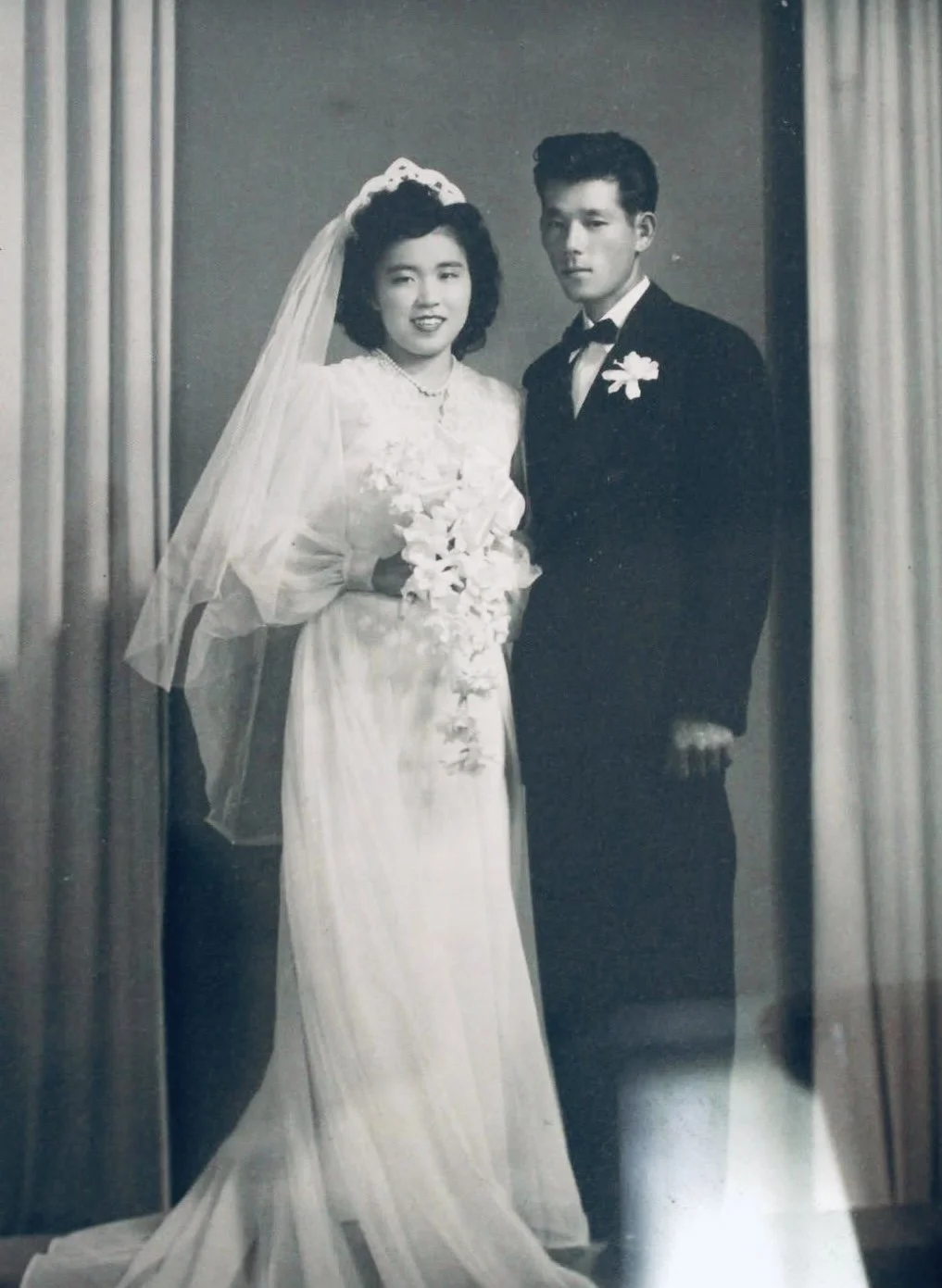
Kayoko and Hiroshi Nakagawa
[Kayo]: And then I used to know him, but he didn't know me. He had so many girlfriends [laugh]. He's very nice looking, you know. And otonashii [gentle, mild mannered] Kibei. And he came to see my mother and I was sitting there, and I was doing domestic at that time. Then he asked my mother who I was.
He was a good, honest man. He was a treasurer of the Buddhist Church when I married him. He was the Long Beach Buddhist Church treasurer. I was always proud of him. He was so honest. He was nice-looking. And he was yasahii [gentle, kind].
[Joyce]: My father, when they came out of the army, they got a dishonorable discharge.
Why was that?
I don't know. So they called this guy in the East Coast to represent them. And he got the honorable discharge. And then, I guess each person got $2,000 or something. So everybody got together and gave [the money] to the lawyer.
All they wanted was the honorable discharge. How long did he serve, was it duration of the war?
[Joyce]: Yeah. Well, his sister was in Manzanar because he was in the army. It was just kind of strange [that she was also in Manzanar].
What did you do for your career?
I worked the floor [in a hospital]. My second floor, Parkview [Long Beach]. I make sure they all had a chart. And then I had so many department I worked under. Also, I used to interpret. They come running to my office and said, "Kayo, Kayo!" And I said, "Yes?" And the nurse said, "There's a Japanese lady crying. You gotta come." So I said, "I'll be right there," you know. That was my job.
[Joyce]: It turned out it was her friend.
I interpreted in Harbor City, Kaiser. So when I looked at the chart, it's my family friend. And then the nurses, the doctors are watching me. I said, "Oh, my God. They're my family friend. And then I give the chart back to them, and I compose myself. Yeah. And I say, Hi, "Obachan, konnichiwa." I talk in Japanese. And then she looked at me and said, "Oh, Kayo-chan."
I think this is where you were very much like your mother.
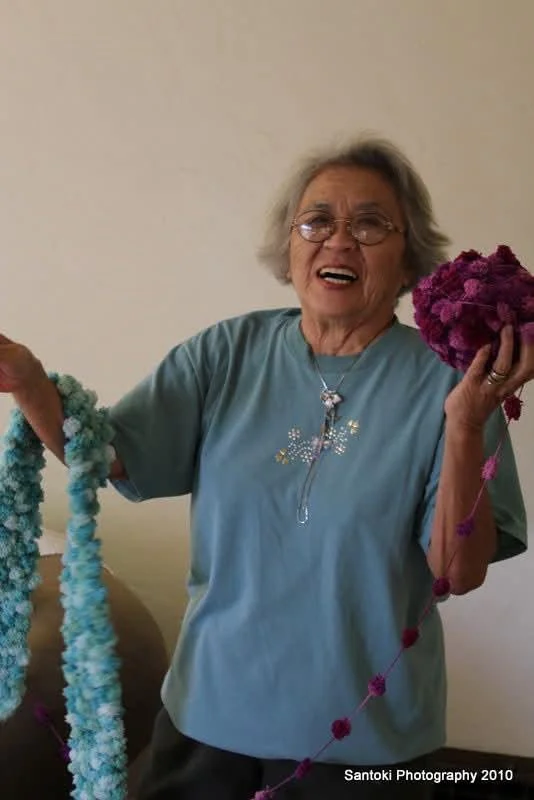
Yeah, yeah, They gave me a nice retirement party at a restaurant. I'm sure. But when I go now, and when I look around, I don't see none of my co-worker. I get sad over there. My daughter said [that] coming home, I'm crying. I got a nice memory with them, you know.
When I go to a get together, I feel really emotional, but I try not to cry. But even going to the hospital where I work for almost 20 years, my coworker was so nice to me. Doctor was so nice to me.
And then what did your husband do for work?
He was a gardener. He was a fisherman, and then he went to be gardener. And I worked at Kaiser for almost 20 years. Do I have an interesting in life?
It's fascinating. I'm curious how you got engaged?
Yeah, he told my mother. He asked me but before that, he asked my mother. Yeah. So here, I'm running with a lot of guys, people. And here he's asking me. But he had a rough life, too. But he was an honest man. That's why I married him. I was still young.
[Joyce]: She was 19. He was 26.
But one thing about it, he was a very honest man. That's what I liked about him. We used to talk.
And where did you end up living?
In Long Beach.
And how many children did you have?
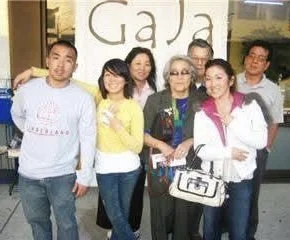
Front row, left to right: Garrett Ogushi, Lindsay Ogushi, Kayoko Nakagawa, Kara Lee. Back row, left to right: Joyce Ogushi, Hiroshi Nakagawa, Susumu Ogushi
Three. The youngest one's in Hawaii.
[Joyce]: And my older brother is in Long Beach.
When did your father pass? Did he live longer than your mother?
[Joyce]: He was 80 something, 86, 85. She passed away when she was 60 something. I know my grandmother was born in 1899. But it was a shock because he was a fisherman and he used to drink. And so when my grandmother passed away, we were like, what? And with liver cancer? And he was the one who was drinking a lot. It was strange. So we couldn't understand that. We couldn't comprehend that. Why, grandma? She didn't do anything, didn't abuse anything. No alcohol, she didn't smoke. Nothing.
You never know why it happens or turns out that way. Were you close to them?
[Joyce]: Yeah. Well, my grandma. That's my memory of my grandmother, because every time you go to her house, I always thought, "Gee, Grandma's always cooking." Always. I never really I saw her sit down. And I always saw food. It just became ordinary to me. She just was always busy. I just figured. Yeah. She would be cooking, and I would ask my mom, Why is she cooking all the time? For all these people. I was young, and I used to get irritated. I even knew that people were taking advantage of her.
Are there any other stories from camp or afterward that you want to share?
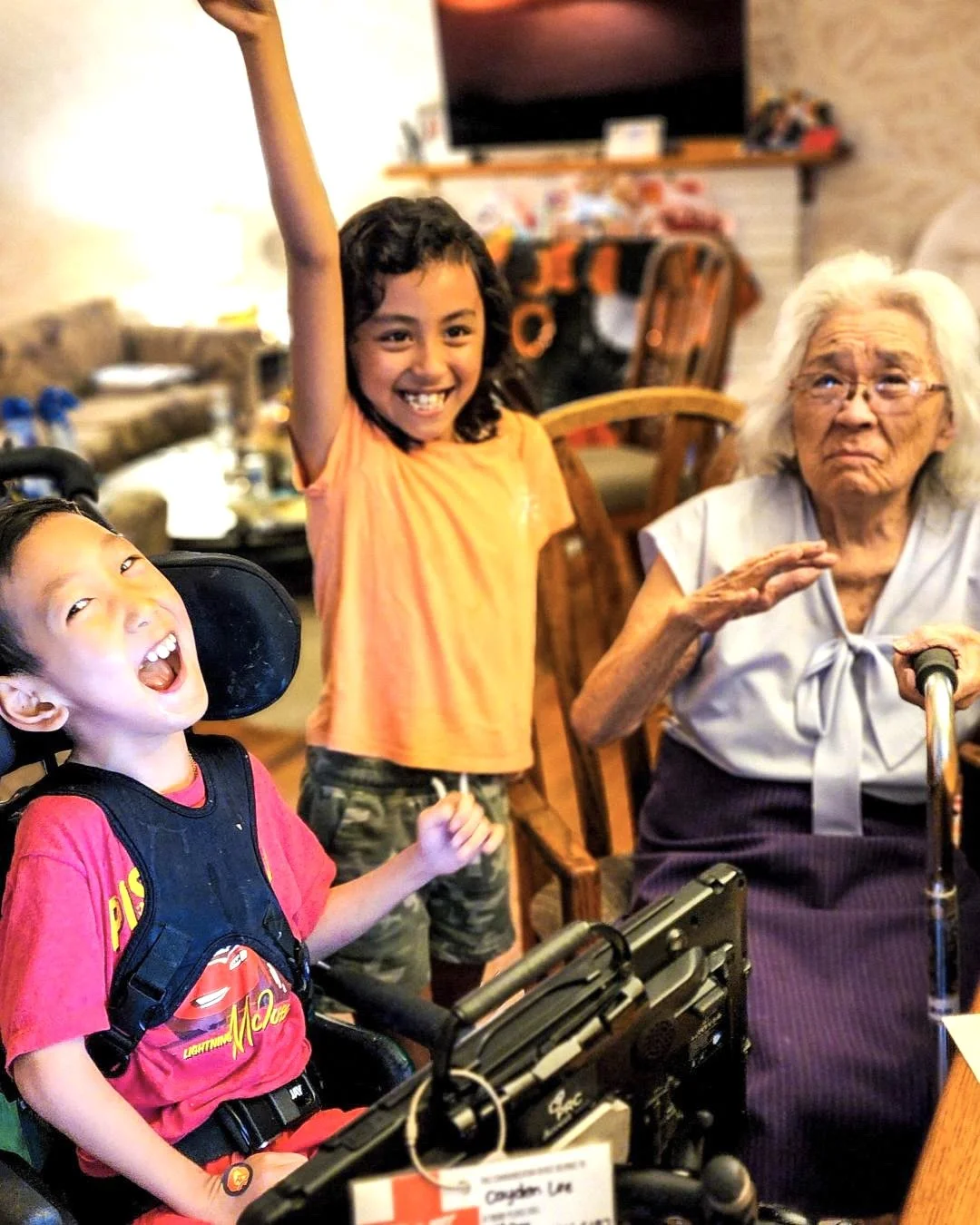
Kayoko and her great-grandchildren
After I got married, there isn't too much, you know [laughs].
[Joyce]: Oh, jeez, all down hill [laughs].
[Kayoko]: I had to raise my child [laughs]. But I was lucky. Because after they grew up, my husband took me to casino.
[Joyce]: Well, you went to Japan.
[Kayoko]: He was a good man.